Procurement Checklist for IP65 Hybrid Slip Rings in Filling Lines
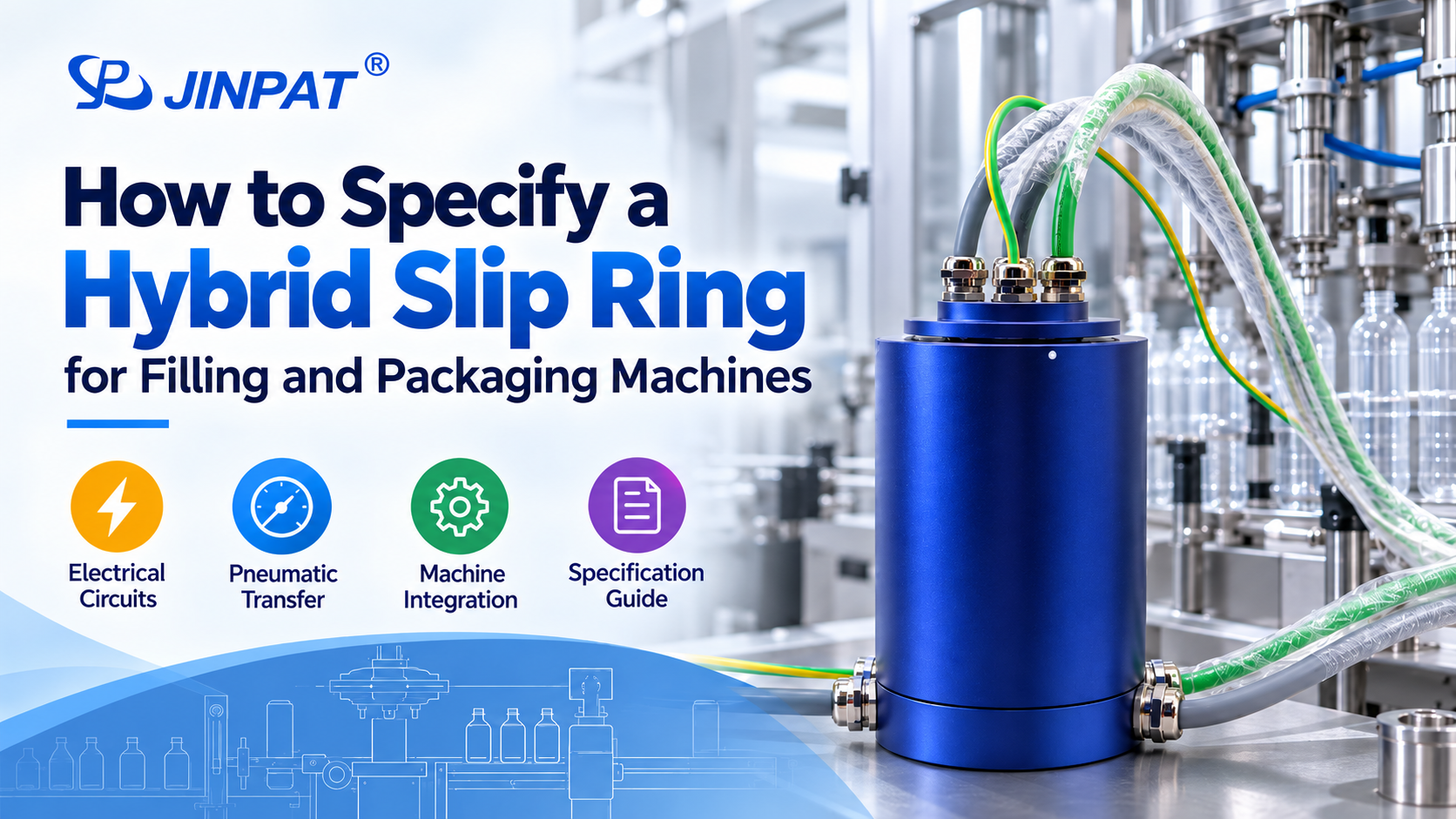
How to Buy an IP65 Hybrid Slip Ring for a Filling Line in Vietnam
Define the purchase boundary
State whether the supplier will provide only the hybrid slip ring or also cables, hoses, fittings, mounting hardware, connectors, test documents and commissioning support. Identify the rotating station and explain whether the line fills bottles, cans, pouches or another container. The process description helps the supplier understand speed, cleaning and downtime priorities.
The reference product is recorded for filling equipment with integrated electrical and pneumatic transfer. Its IP65, 10 bar and 400 V values are useful starting points, not universal catalogue promises. Require the supplier to confirm every value for the quoted drawing.
Electrical checklist
Provide one row for every circuit: voltage, continuous current, peak current, load type, switching frequency and required termination. Identify protective earth, shields and sensitive signals. Ask which tests will verify continuity, insulation and dielectric performance. Do not accept a single total-power number in place of a circuit schedule.
Pneumatic checklist
Specify the approved medium, normal and maximum pressure, flow, duty cycle, filtration, port size and allowable leakage. If 10 bar is required, define the working condition and test method. Ask for the pressure-drop curve or a project-specific test when actuator response is critical.
Clarify whether the air path is for machine actuation or a process function. Do not describe the assembly as food-contact compliant unless the materials, cleanability and required declarations have been reviewed for that exact use.
Humidity and cleaning require written conditions
Vietnamese factories can range from climate-controlled rooms to warm, humid production halls. Provide the expected temperature, humidity and condensation risk. Describe dust, splash direction, cleaning agents and whether water jets are used. IP65 does not by itself prove chemical resistance, steam-cleaning suitability or hygienic design.
Ask how connectors, cable glands and unused pneumatic ports must be installed to preserve the documented protection. If the area contains flammable solvents, request a separate hazardous-area review rather than relying on the IP rating.
Mechanical and service checklist
Send a controlled interface drawing that shows axis, mounting surface, available envelope, rotation speed and access. Ask the supplier to return hose and cable exit directions, anti-rotation method, tolerances and maintenance clearance. Confirm that local technicians can reach fittings and terminals without removing unrelated machine modules.
Documents and factory acceptance
Request the released dimensional drawing, circuit schedule, pneumatic diagram, terminal and port plan, installation instructions and test report format. If UL-related language is important, request the exact supporting record and verify that the quoted configuration falls within its scope. Do not rely on an unlinked logo in a brochure.
Agree on the FAT before ordering. Include electrical tests, pressure hold, leakage, rotation under representative load and verification of labels and interfaces. For sensitive signals or fast valves, plan a system test with the real controller, cables, hoses and actuator demand.
Compare total project risk
Use one compliance table for every bidder. Mark each item as confirmed, deviated or pending, and request evidence for critical claims. Compare delivery time, technical deviations, documentation quality, replacement lead time and local support in addition to unit price.
This method makes quotations comparable and helps prevent a low-cost component from creating expensive line modifications during installation.